State and local officials are working to close "gaps" in Washington's arson law that punish es offenders the same even when their fires are drastically bigger or more destructive.
"As currently constituted, the crime victims are more of an afterthought, and not really first and foremost when thinking about arson," Spokane County Prosecutor Preston McCollam said in an interview Monday.
The legislation is expected to be released in the coming months, before the 2027 session begins in January, and is in response to a devastating fire season that destroyed hundreds of Spokane homes and temporarily displaced 65,000 residents.
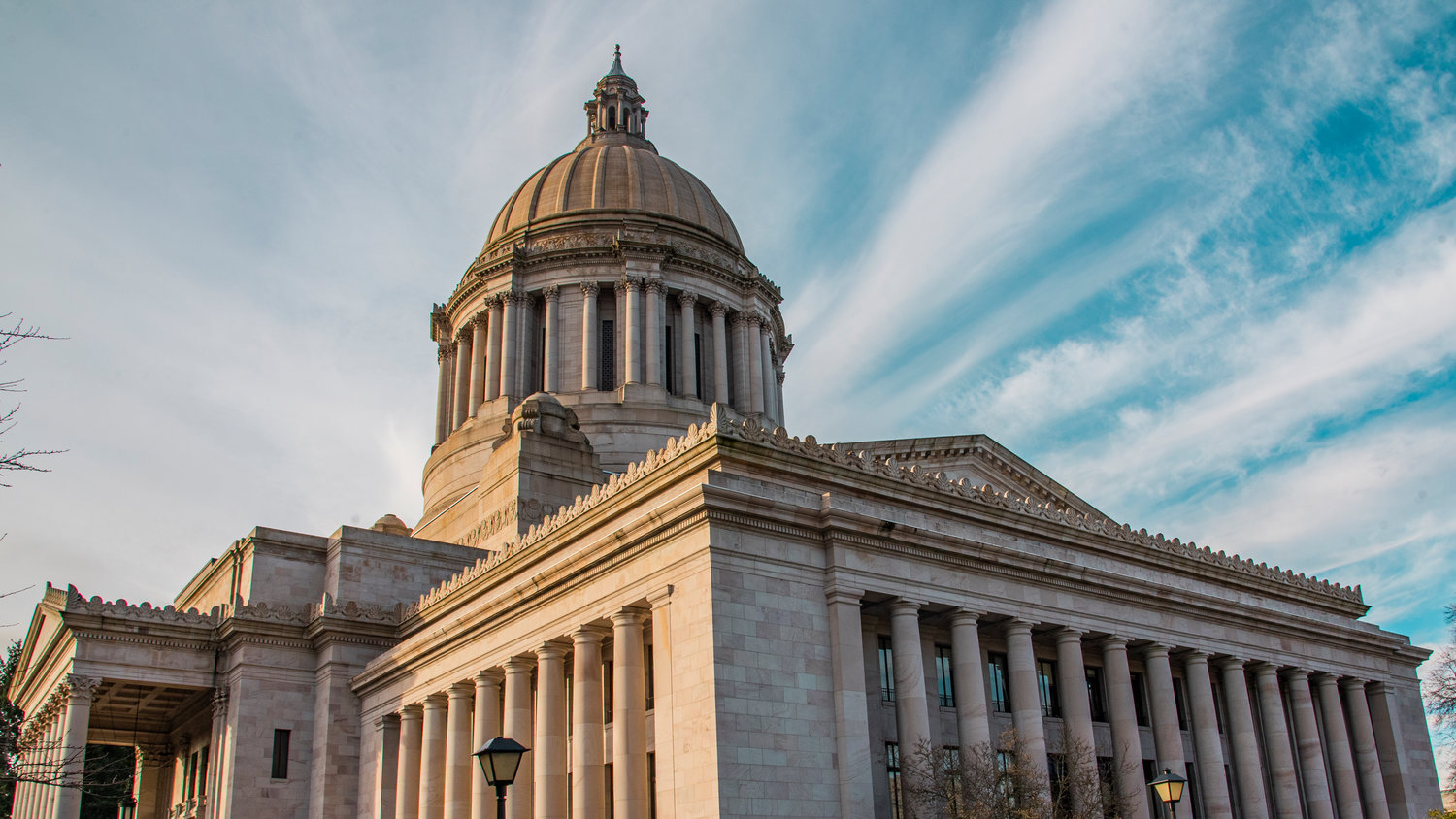
State Sen. Marcus Riccelli, D-Spokane, said in an interview the legislation is among several proposals lawmakers are developing in the wake of the Spokane Complex fires. Riccelli plans to sponsor the changes in state arson law when lawmakers return to the state capitol.
"Not only making this more of a deterrent, but also making sure that people are prosecuted to the fullest extent of the law when they cause this kind of mass destruction and issues like we face with these fires here," Riccelli said.
The proposal comes after a suspected arson caused more than $1 billion in damage in Spokane this summer.
Aaron Farinacci, 37, is charged with five counts of first-degree arson following his arrest in connection to the Old Trails fire, with the four additional counts relating to fires he is suspected of starting last summer. The Old Trails fire, which sparked on Aug. 1, destroyed nearly 700 Spokane County structures and displaced thousands of residents.
Last month, Farinacci was federally indicted on suspicion of arson for the blaze. He remains in custody at the Spokane County Jail.
Under state law, first-degree arson charges can be brought when someone knowingly and maliciously started a fire in an occupied building, a fire that caused at least $10,000 in damage with the intent to collect insurance money, or a fire that is dangerous to life.
While first-degree arson is punishable by up to life in prison and a $50,000 fine, the traditional sentencing range for a first-time offender is 21 to 27 months.
McCollam has expressed frustration that state arson laws do not differentiate between the number of structures or acreage destroyed, and current law does not allow for aggravating factors.
"I reached out to Attorney General Nick Brown directly and told him, in my review and in looking at and studying our state arson statutes, they're just not adequate to capture the devastation like we're seeing on the scales across the Pacific Northwest and Washington," McCollam said.
McCollam said he's identified the need for an aggravated arson statute "of some sort."
"The frustrating thing about the current arson statute is, if an arsonist sets fire to one building, the unit of prosecution, or the counts he can be charged with, is one count," McCollam said. "And it's also the same if he burns down 100 buildings. Because the unit's tied to the fire, not what he actually destroys. And there's some inadequacies there."
McCollam pointed to California and Oregon as states that have aggravated arson statutes on the books. Under California law, a suspect can be charged with aggravated arson if they have been convicted of arson in the last five years, if the damages caused exceed $10.1 million or if the fire damages or destroys five or more inhabited structures.
The penalty for aggravated arson in California is 10 years to life in prison.
"That's what I'm hoping to see come out of this, is that we have an arson statute that's adequate to the crime itself, that's adequate to the damage that was caused and to the number of victims that were impacted," McCollam said.
Riccelli is working on the legislation with Brown and McCollam, among other local officials. Riccelli said he is "optimistic" about working with Brown and McCollam to draft a "commonsense proposal."
"I think if that's how it's brought forward; in the wake of this tragedy, I'm hopeful that my colleagues will respond in a bipartisan fashion," Riccelli said.
Mike Faulk, a spokesperson for Brown, said the attorney general's office is currently working on proposed changes, though details remain "tentative."
"We are working on legislation to close a gap in state arson law to address the sort of actions alleged in the Spokane fires," Faulk said in an email. "We are working with Spokane area officials and other policymakers."
Riccelli said he's seen draft legislation, and he "looks forward" to circulating a discussion draft ahead of the legislative session. Legislation can be prefiled for the session starting Dec . 7.
Modifying Washington's arson statute is one of several bills lawmakers will consider in response to the Spokane Complex fires. Last week, Gov. Bob Ferguson backed a sales and use tax rebate for those rebuilding after the Spokane Complex fires.
According to the governor's office, a homeowner who spends $400,000 rebuilding their property in Spokane could qualify for a rebate of roughly $36,000 if the legislation is passed.
Riccelli plans to sponsor the legislation.
"This is a serious issue for our community and something I want to help collaboratively champion in Olympia," Riccelli said. "Along with a number of other things that are fire-related for our community and broadly."
© 2026 The Spokesman-Review (Spokane, Wash.). Visit www.spokesman.com. Distributed by Tribune Content Agency, LLC.



