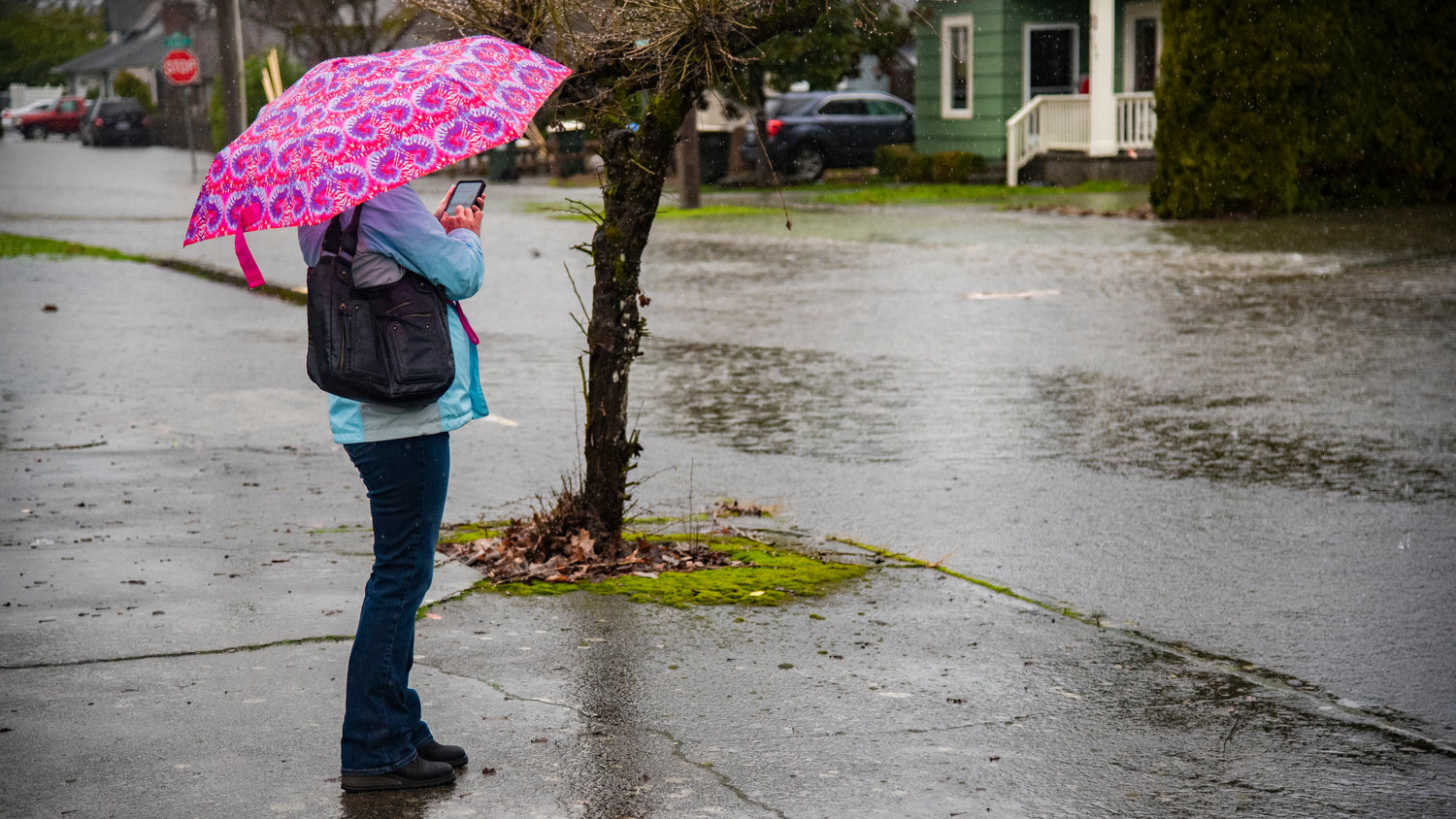
Western Washington’s dry spell is over. For the next few months, at least.
An atmospheric river began dumping rainfall over the region early this week and, with a brief respite, forecasters expect the precipitation to continue into the weekend.
For Washington's coast, that has meant rough surf and flood concerns. Farther inland, like in Seattle, that has meant pouring rain, strong winds and even some power outages.
The return of Washington’s rainy season not only marks an end to yet another summer of severe drought but also a revival of flood risk across its waterways. Parts of the state are still recovering from last year’s devastating floods.
It’s also another opportunity to review what these atmospheric rivers are, the influence they have on Washington and how they might be evolving as climate change continues to warm Earth’s atmosphere.
What is an atmospheric river anyway?
You’ve probably heard of them labeled as “pineapple expresses” before, though they’ve undergone a bit of a rebrand in recent years.
Atmospheric rivers are a band of warm and moisture-laden air rising from the subtropical regions of the globe, Washington state climatologist Guillaume Mauger said. As prevailing winds blow these weather patterns north toward the Pacific Northwest, they release their water over low-pressure areas.
Simply put, they dump loads of rain.
Most of this region’s major storms stem from atmospheric rivers. They also bring most of Western Washington’s flood risk.
“We’re kind of a one-trick pony when it comes to flooding,” Mauger said.
This week's atmospheric river brought nearly an inch of rain on Tuesday, National Weather Service meteorologist Jeff Michalski said.
What do they mean for Washington?
The rainfall means much-needed moisture for a drought-plagued state.
Earlier in the month, the U.S. Drought Monitor considered more than 94% of Washington to fall under “abnormally dry” conditions. More than 61% of the state suffered from “moderate” drought or worse.
This summer marked Washington’s fourth year of severe drought in a row, part of a pattern of hot, dry summers broken each winter by the rain and dwindling snowpack. While there has been some scattered rainfall in recent weeks, this October was drier and sunnier than normal, Mauger said. The state saw around half its normal amount of precipitation.
The arrival of this atmospheric river comes a little later than normal, Mauger said, and the rainfall is providing respite for the state’s parched soils and waterways.
News of heavy rains fueled by atmospheric rivers might be a cause for some dread in California, where the fairly sporadic patterns can often be the harbingers of floodwaters. But they’re more common in the Pacific Northwest, Mauger said. The region sees perhaps a dozen or more each year.
While early season rainfall indeed offers a respite from drought conditions, the timing of these patterns matters greatly.
Should atmospheric rivers arrive during king tides, when waters in Puget Sound are at their highest, the deluge can lead to a great deal of flooding in low-lying areas. Such was the case in 2022 when the combination inundated Seattle’s South Park neighborhood, flooding homes and sparking evacuations.
Or, back-to-back atmospheric rivers can bring massive quantities of rain in a relatively short duration, overwhelming waterways and public infrastructure, even degrading flood-control measures like levees and temporary barriers. This was the case last year in one of Washington’s most devastating natural disasters, which damaged or destroyed thousands of homes, displacing huge swathes of people and racking up hundreds of millions of dollars in damage.
How does climate change factor in?
Well, that’s less clear, Mauger said.
There’s mixed data on whether the earth’s warming atmosphere means atmospheric rivers are going to hit Washington more often or whether they’ll have the capacity to dump more rainfall, he said. Different weather gauges say different things and a statistically significant pattern hasn’t quite emerged.
Some meteorologists think over the coming decades global warming might cut into the frequency of these atmospheric rivers, if even by a fraction. However, when they do arrive, they might be as much as 25% wider and longer, dramatically increasing the amount of wind and rain they bring with them, one 2018 NASA study explained.
And there are a few other ways in which climate change will likely factor in.
Washington’s precipitation is falling increasingly as rainfall rather than snow. This translates to more water when we don’t need it (and can’t capture it) and less when we do.
Atmospheric rivers might exacerbate that growing paradigm but probably not by much, Mauger said. Because these patterns originate in the tropics, they’ve historically meant rainfall rather than snow, except along the higher elevations.
However, if the large quantities of rainfall on snow that has already accumulated, it can melt that snowpack away. This could worsen flood conditions and also chew away at the frozen water storage that Washington needs to avoid drought during the summer.
During those hot, dry months, wildfires can also burn hotter and spread faster. These blazes scorch the landscape and burn away trees or shrubs, the roots of which stabilize the ground. Often, heavy rains after wildfires lead to land- or mudslides.
The remote town of Stehekin, on the north shore of Lake Chelan, suffered serious damage during the December floods after vast quantities of water rushed down a burn scar left from fires the year before. Houses, roadways and even the small town’s water treatment plant were all hit.
Fresh burn scars pepper much of Washington’s landscape after this fire season , which was one of the most devastating in the state’s history.
What to expect later in the week?
After Tuesday’s rainfall over Seattle, this week’s atmospheric river is expected to abate for a short period, Michalski said.
Then the rain is likely to return with perhaps another inch of precipitation between Friday and Saturday, Michalski said.
© 2026 The Seattle Times. Visit www.seattletimes.com. Distributed by Tribune Content Agency, LLC.