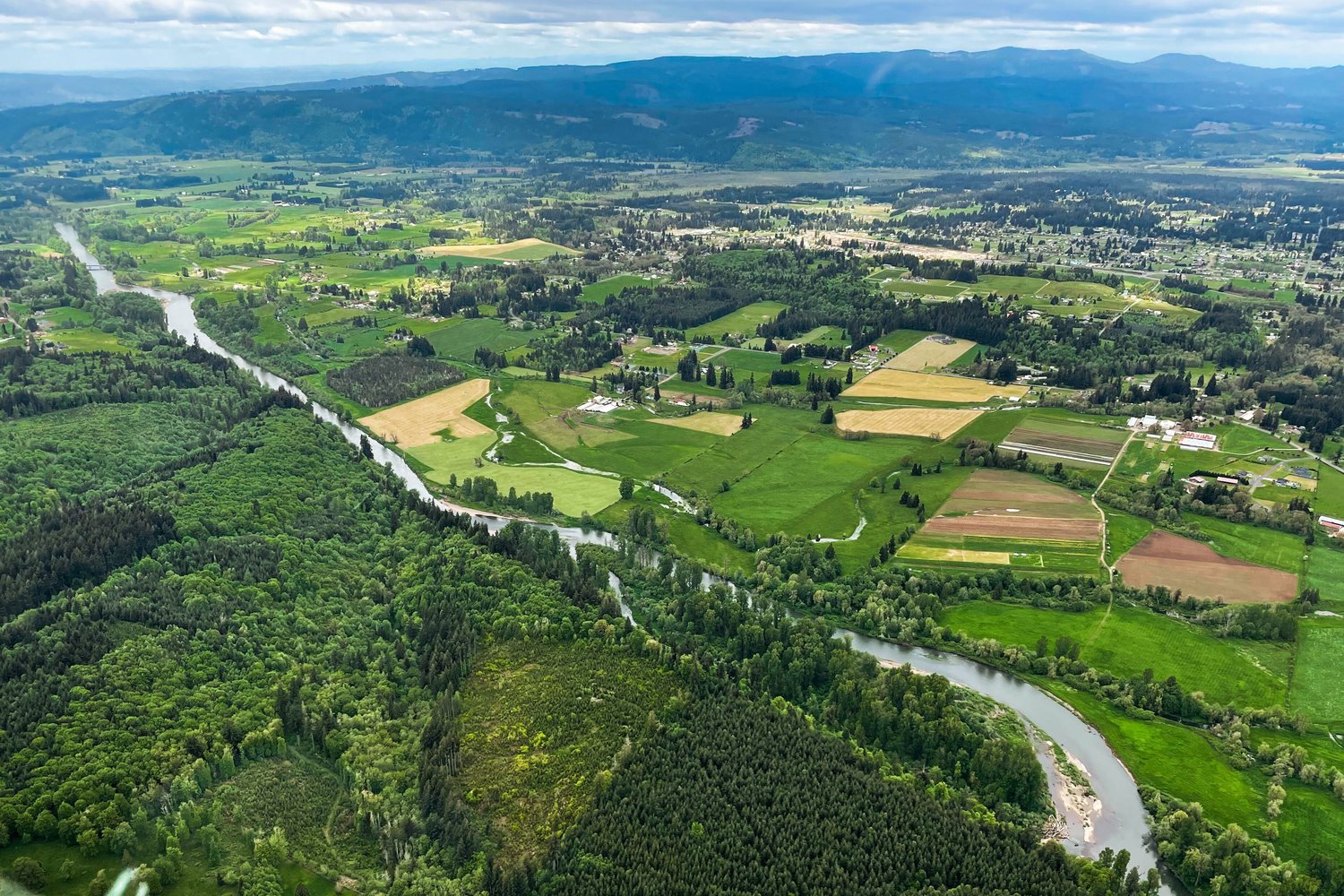
The fishing permits offered by the Confederated Tribes of the Chehalis Reservation to non-tribal members differ from the description given by the Washington state Department of Fish and Wildlife (WDFW) in its recent statement on the tribe’s policy.
According to WDFW, the Chehalis Tribe is charging non-tribal members a $500 boat-fishing permit or a $45 bank-fishing permit to access the stretch of the Chehalis River located within its boundaries.
Those who do not obtain the permits may be subject to a citation, according to WDFW.
According to the tribe’s amended ordinance on fishing regulations, the two permits actually pertain to a “guide permit” and an “individual permit.”
The guide permit costs $500 for non-tribal members and must be obtained by any individual who takes at least one person on a boat along the Chehalis or Black rivers located within the tribe’s reservation. The ordinance defines a guide as someone who receives a “fee in money, goods, services, or any other kind of compensation or consideration.”
The guide permit includes both an individual permit for the guide and a tribal business license.
Individual permits cost $45 for non-tribal members and are available to those who wish to fish from the river bank, a guide boat or a personal boat.
According to the ordinance, the permits apply solely to hook-and-line fishing and are valid for the fall Chinook, coho, steelhead, trout and other game fisheries.
The ordinance also allows a tribal member to assist one non-tribal member in fishing without having to obtain a guide permit. That non-tribal member must have an individual permit.
According to the ordinance, non-tribal members are prohibited from using boat launches or any other bank area on the reservation to either tie up or launch their boat.
Non-tribal members who violate the tribe’s ordinance may be subject to a citation and $500 civil fine, along with the forfeiture of all fishing gear, boats and caught fish.
In a Wednesday email to The Chronicle, WDFW said it was aware the tribe had “recently amended their code language and titles for their proposed fishing permits,” as described in amended documents uploaded to the tribe’s website on Sept. 29.
WDFW released its original statement on the tribe’s fishing policies on Sept. 29.
According to WDFW, the tribe’s website and documents had previously listed the permits as a “$500 boat fishing permit or $45 bank fishing permit.”
The Chehalis Tribe’s Natural Resource Department did not immediately respond to a request for comment on its fishing regulations.
Fishing permits can be purchased at 420 Howanut Road in Oakville. For more information, and to view the complete tribal ordinance on fishing regulations, visit https://tinyurl.com/578tvk94.
A public legal dispute
In its Sept. 29 statement, WDFW said it “disputes the Chehalis Tribes’ legal arguments for citing anglers lawfully participating in state-managed fisheries on a navigable river.”
The Chehalis River runs some 125 miles through Southwest Washington, passing through Lewis, Thurston and Grays Harbor counties, before flowing into the Pacific Ocean near Aberdeen. Approximately 10 miles of the river run through the tribe’s reservation.
On Sept. 30, the tribe declared its ability to impose the civil regulations, which it says is neither a recent development, “nor is it intended to create conflict with members of the public.”
“The Tribe has sustained itself through fishing on the Chehalis River, and other waterways within its historical territory, since time immemorial,” the tribe said in a statement.
The tribe said it was “deeply concerned” by WDFW’s decision to issue a public statement, saying it risked “escalating tensions” rather than “resolving the underlying jurisdictional issues through appropriate governmental channels.”
“That approach undermines the authority of the Tribal government and, more importantly, risks creating unnecessary confrontations that could jeopardize the safety of the general public, Tribal members, law enforcement, and WDFW personnel,” the tribe said.
WDFW indicated it was working with tribal leadership, county leadership and law enforcement “regarding the tribe’s claim to sole authority” over fishing in the disputed section of the river.
The tribe likewise said it “remains willing to engage directly and professionally with WDFW, the Washington Attorney General's Office and other appropriate governmental entities.”
“The overwhelming experience of the Tribe has been one of compliance and peaceful co-existence,” the tribe said.
Former tribal chairman responds
On Oct. 3, former Chehalis Tribal Chairman Dustin Klatush posted on Facebook about the governmental dispute — and the negative public response directed at the tribe.
Klatush described his recollection of a tense meeting that took place a year ago with WDFW Director Kelly Susewind, the tribe’s fish manager and legal counsel for both parties. According to Klatush, the group had met, in part, to discuss the tribe’s fishing policies and its citing of non-tribal members.
In his post, Klatush alleges a state assistant attorney general threatened to “arrest our officers and fishermen, then asked if we wanted things to go back to the way they were in the old days.”
“The Chehalis Tribe is part of these communities,” Klatush wrote. “We provide jobs, support local businesses, donate to our surrounding communities, and show up for our neighbors. We have families and friends throughout this region, and our communities are connected in more ways than some people realize.”
Klatush, who was named The Chronicle’s 2025 Person of the Year, resigned as chairman in July following allegations of unprofessional conduct during a trip to Arizona.
Klatush said tribal members “shouldn’t have to live in fear or be treated like we don’t belong.”
“Let’s get back to being good neighbors,” Klatush wrote. “Let’s respect one another, listen to one another, and remember that our children and grandchildren are the ones who will inherit the relationships we build today. We have an opportunity to bring our communities closer together instead of tearing them apart.”
WDFW did not offer an immediate comment on Klatush’s statements.
Sheriff Sanders issues statement:
Shortly after publication of this article, Thurston County Sheriff Derek Sanders weighed in on the matter. Here's his full statement from social media:



