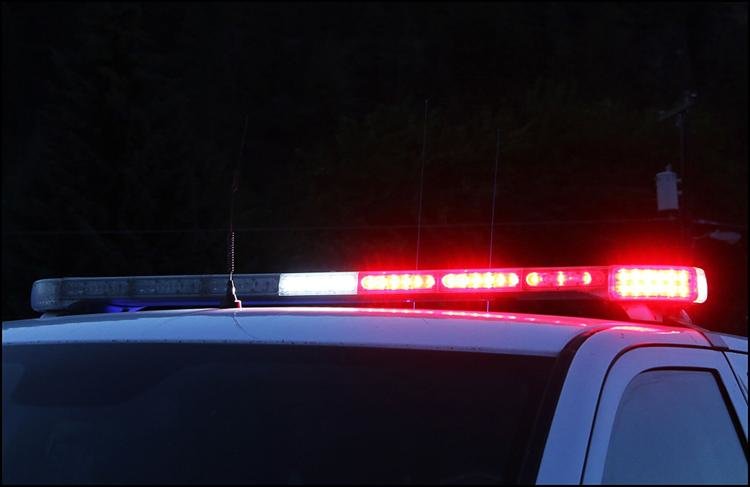
When officers tried to pull over Umatilla County Sheriff Terry L. Rowan last year after motorists reported seeing his car speeding, swerving and straddling the eastbound lanes of Interstate 84, Rowan flashed his unmarked car’s blue and red lights, according to investigative reports obtained by The Oregonian/OregonLive.
At some point later, he popped small nicotine pouches into his mouth that an investigator discovered as he observed Rowan to ensure he did not eat, drink, smoke or take in any substances that could contaminate his breath-alcohol test.
Rowan then called a fellow sheriff – the boss of the deputies who stopped him — when offered a chance to arrange a sober ride home. The Gilliam County sheriff collected Rowan in his personal truck.
The Oregonian previously reported Rowan’s May 16 arrest. He pleaded no contest to the misdemeanor charge of driving under the influence of intoxicants and is expected to complete diversion in June. He continues to serve as county sheriff. He never faced a 90-day license suspension, as other first-time DUII offenders typically do.
The police reports offer new details of Rowan’s actions and the law enforcement response.
A critic is now leading a recall campaign to oust Rowan and filed a new complaint against him Tuesday with the state Department of Public Safety Standards and Training, arguing that Rowan’s flashing of his emergency lights in an unmarked sheriff’s vehicle during the stop, repeated denial that he drank anything and apparent attempt to disrupt the breath test should have led to an official misconduct allegation.
“Had concerned citizens not called, there could have been grave consequences,” Chris Waine of Pendleton wrote in the complaint. “His conduct is reprehensible.”
Rowan, 62, didn’t immediately return messages for comment on the new information.
After his arrest, he said in a statement that he took “full responsibility” for his behavior and understood “the seriousness of the matter.” He blamed “personal challenges,” though he said he recognized that didn’t excuse his conduct.
“I am committed to learning from this experience, rebuilding trust, and accepting all responsibility for my poor decision and actions and being fully transparent as the process moves forward,” he wrote.
Gilliam County Sheriff Gary Bettencourt said he didn’t interfere in his agency’s investigation of Rowan and went to help a friend of many years who called him. Bettencourt said he didn’t have his badge or gun when he picked up Rowan.
“There’s no wrongdoing. Nothing brushed under the rug. Nothing covered up,” he said by phone Tuesday.
The sheriff’s office reports show that Rowan told Gilliam County deputies who stopped him that he was heading home from a resort in Sunriver where the Oregon State Sheriffs’ Association had held a conference and that he had hurt his back playing golf.
He claimed he hadn’t had anything to drink, but he failed a field sobriety test at the scene, according to the reports.
The initial 911 call came in at 6:39 p.m. from an unidentified woman who reported a white pickup traveling “super fast” and swerving on northbound U.S. 97 in Sherman County, about a mile away from Biggs Junction. That call got cut off, and no state police or Sherman County sheriff’s officers were immediately available to respond, according to a Gilliam County sheriff’s report and a recording of the call.
Then about 10 minutes later, at 6:51 p.m., 911 in the Gilliam County region took a call from Oregon State Police passing on a report about a white newer GMC pickup heading east on I-84 near milepost 104, saying a trooper saw the truck “trying to get onto 84” from Highway 97 and “almost went the wrong way,” according to the recording. The caller also reported the truck previously “driving in both the northbound and southbound lanes” of Highway 97.
Two Gilliam County sheriff’s deputies responded from their Arlington Regional Office, heading west on I-84. Deputy Thomas Burdick set up around milepost 123 eastbound by Phillippi Canyon and Sgt. Anthony Redden-Pickett staged at milepost 129 near Blalock Canyon, his report said.
At 7:02 p.m. Burdick reported a white GMC Sierra heading east at 91 mph, far exceeding the 70 mph speed limit. As the truck passed Redden-Pickett’s spot, he said he saw it traveling down “the middle of both eastbound lanes.”
As Redden-Pickett overtook the truck, he said he saw it drifting across the fog line, driving on the shoulder and nearly colliding with a guardrail, before it suddenly veered back into the right lane.
Redden-Pickett said he tried to stop the truck at 7:08 p.m., activating his lights and siren near milepost 132 in the left eastbound lane of I-84. The truck slowed to about 45 mph and moved to the right side of the freeway and onto the shoulder.
“As my patrol vehicle was coming to a complete stop, I observed red and blue flashing emergency lights activated on the GMC pickup,” Redden-Pickett wrote. When he approached the truck, the driver’s side front door opened and he quickly recognized Rowan.
The flashing of lights is considered a universal signal to notify officers that they’re stopping a fellow officer, other law enforcement officers said.
The sergeant said he asked Rowan, “What’s going on?”
“Terry pointed with his finger” and said “home,” the sergeant’s report said.
Redden-Pickett noticed Rowan’s glossy, watery eyes, his report said. He asked Rowan how much alcohol he had to drink and Rowan said none, according to the report.
Redden-Pickett asked why Rowan was driving so erratically and Rowan replied that he had hurt his back playing golf at the sheriffs’ association spring conference and was “trying to get home, so I can lay flat.” The conference had ended a day earlier, according to the sheriff’s office report.
Rowan turned down medical help but shared that his back was “killing him” and that he had taken a muscle relaxer and pain reliever, in addition to his daily medication, Redden-Pickett wrote.
The sergeant noted Rowan’s response to his request to see his driver’s license, registration and insurance was slow. Rowan confirmed the truck belonged to Umatilla County but did not provide proof of insurance.
By then, Burdick had arrived on scene and got Rowan’s consent to participate in a field sobriety test, although Rowan told Burdick, “I’m completely sober,” according to Burdick’s report.
Both Redden-Pickett and Burdick said in their reports that they smelled alcohol on Rowan. They agreed to give him only one part of the field sobriety test because of his reported back pain, their reports said.
Rowan failed the horizontal gaze eye text, scoring a 6 out of 6, meaning Redden-Pickett observed all indicators of impairment in both of his eyes, according to his report. The sergeant told Rowan that he believed the sheriff was “impaired.”
“No,” Rowan responded, shaking his head, and repeated that he had not had any alcohol, according to Redden-Pickett.
Redden-Pickett arrested Rowan at 7:34 p.m. on an allegation of driving under the influence of intoxication, patted him down for weapons but found no items of concern, his report said. Rowan’s handgun was secured in the truck.
The sergeant escorted Rowan to the rear passenger seat of his patrol car and let him sit there without handcuffs “due to the back injury and the smaller inmate compartment,” according to his report.
Another deputy drove Rowan’s sheriff’s truck back to the Arlington office.
At the station, Rowan agreed to give a breath sample.
Redden-Pickett retrieved a state police checklist for the Intoxilyzer breath test and then began a pre-test observation of Rowan at 7:51 p.m.
He saw Rowan had a Zyn tobacco pouch in his mouth and asked him to remove it. He visually inspected Rowan’s mouth again and didn’t see any other items in his mouth, he wrote. But about six minutes into the observation period, he saw another Zyn chew in Rowan’s mouth, according to his report.
Redden-Pickett had Rowan remove it and started another 15-minute observation period, which ended at 8:12 p.m.
Before the breath test, Rowan wouldn’t answer any more questions about alcohol consumption. He provided two breath samples and registered .19% blood-alcohol content level at 8:19 p.m. – more than twice the legal limit of .08 and more than an hour after he was stopped on the freeway.
Rowan then called his friend Bettencourt to come get him once given a chance to call a “sober responsible party” to take him home or go to jail.
Bettencourt said he had been informed by his deputies that they had Rowan in custody, and he said he told the sergeant to do his job.
Bettencourt said he considered the potential appearance of a conflict in giving Rowan a ride but chose to support a friend once Rowan called him. He said he didn’t consider it any different than traveling with him to a conference or going to the river to fish with him.
He said Rowan talked over personal issues with him on the drive and said that he didn’t share those with investigators because it was irrelevant and the investigation had concluded.
“I am a good friend and that’s what I did and I don’t regret it,” Bettencourt said. “The investigation was done.”
Rowan has served as Umatilla County’s sheriff since 2013. Bettencourt has served as Gilliam County’s sheriff since 2005. Umatilla and Gilliam counties are separated by Morrow County on the Columbia River border with Washington state.
Gilliam County District Attorney Ryan Rodighiero said he wrestled with the “tough decision” not to charge Rowan with official misconduct.
He said he found that most other official misconduct cases he reviewed involved law enforcement officers on duty accused of more serious crimes such as sexual misconduct or selling guns.
Rowan wasn’t on duty, though he was driving a sheriff’s truck, Rodighiero said.
Because Rowan didn’t flash his emergency lights until he was stopped and pulled over, Rodighiero said he didn’t believe Rowan was trying to get out of the stop.
Rowan didn’t flash his badge but was quickly identified by the sergeant who stopped him, he noted.
Regarding the Zyn pouches in his mouth, Rodighiero said Rowan “should know better.”
He said people commonly pop mints or chews to overpower the alcohol on their breath, but in Rowan’s case, he blew a high alcohol content.
“It didn’t seem like anything nefarious,” the district attorney said.
The district attorney said he was unaware that Bettencourt drove Rowan home after his arrest until he read the final reports. He said that’s not criminal.
The state public safety standards agency opened a professional standards investigation into Rowan last May after his arrest and it’s still “under review,” according to Sam Tenney, department spokesperson. While the department opens an inquiry once it learns of an officer’s arrest, it doesn’t proceed with its investigation until the criminal case is concluded, he said.
Due to his arrest, the standards department informed Rowan that he could not participate any longer as either a member of its board or its police policy committee, and he has since resigned from both, Tenney said.
©2026 Advance Local Media LLC. Visit oregonlive.com. Distributed by Tribune Content Agency, LLC.



