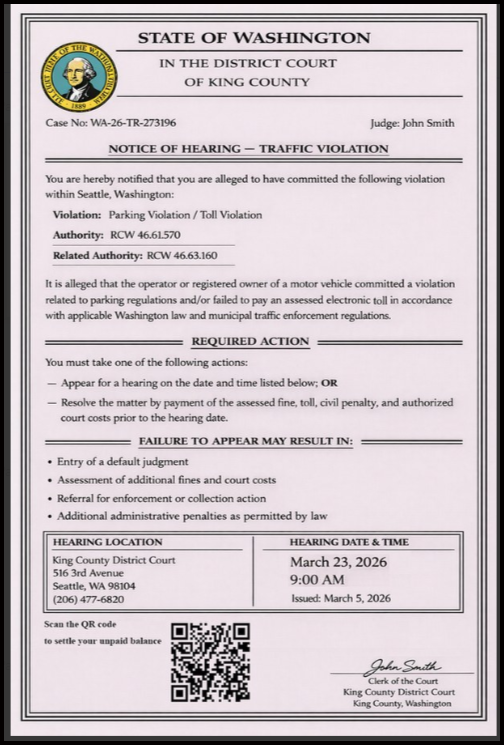
Authorities in Washington are warning drivers about widespread traffic-ticket phishing scams.
Many drivers in the Evergreen State have received spam emails and texts in recent months saying they owe money to the Department of Licensing, according to the department.
Scammers have asked for money related to unpaid tickets, Good To Go tolls and Real ID. Some messages threaten legal repercussions if demands aren’t met.
“We never send texts or emails with these characteristics,” the department’s website states. “We also never ask for information outside of a secure account accessed by the customer without phone verification.”
Some of the scams include:
King County District Court has a “fraud alert” warning people to verify they actually have a ticket before paying, by calling the court at 206-205-9200 or checking the court’s case database.
“The Court does not send tickets via text or email,” the alert notes. It also gives a link to an example of one of the more common fake texts, where the judge is listed as “John Smith,” who doesn’t actually exist.
Attorney General Nick Brown, in a news release, said it’s hard to identify the scammers as they often operate from foreign countries and disguise their phone numbers.
“This in turn makes it very difficult to prosecute them and recover consumer funds,” the release states.
Brown’s office encourages Washingtonians to be wary, not to click on suspicious links and to refrain from giving out private information.
If you believe you are a victim of a phishing scam, you can file a complaint with the attorney general’s office at atg.wa.gov/file-complaint. Or you can report the incident to the Federal Trade Commission at reportfraud.ftc.gov.